
Ask a pet-transport operator what their customer is buying. The answer is usually a story about trust: a stranger handing over a family member, needing to be walked slowly through crates, vaccination records, and flight logistics before they will believe the business is careful enough to deserve the job. It is a flattering story for the operator to tell about itself. For the first five minutes of most actual calls, it is also wrong.
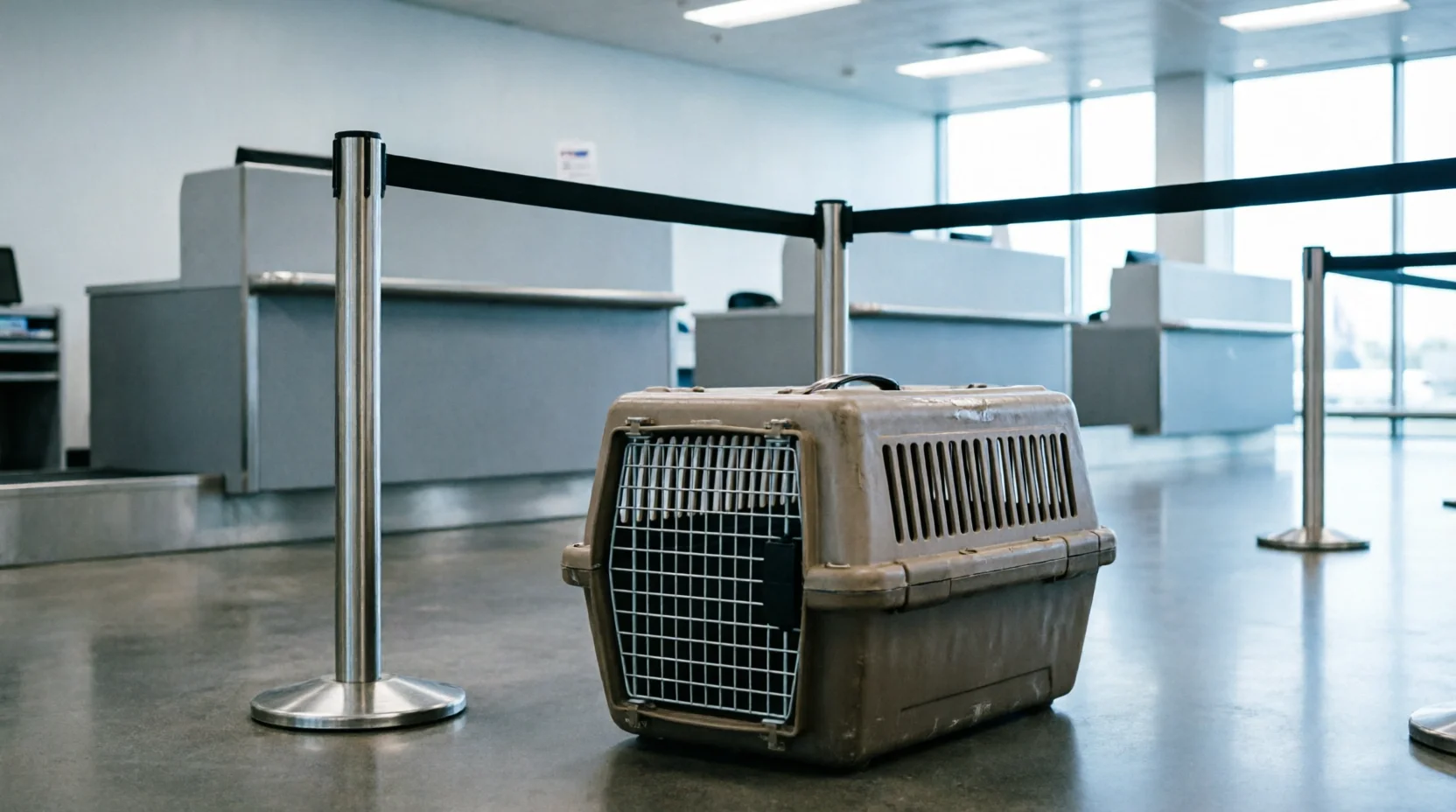
Most of these customers did not wake up choosing a premium, relationship-first service. They tried to book the trip themselves, the same way they book everything else that flies: enter the route, enter the date, get a price. Somewhere in that process, a page told them no. A breed was on a banned list. A route was under a seasonal embargo. The airline simply did not offer the option to a member of the public at all. By the time a specialist’s phone rings, the caller has already failed once, and the call that follows is not a considered purchase. It is damage control.
> “Why do pet transport customers act like they’re booking a flight instead of hiring a service?”
Because that is exactly what most of them tried to do first, and it did not work.
Why do pet-transport customers act like they’re booking a flight, not hiring a service?
Scott Galloway has built a career on the observation that companies tell themselves flattering stories about why customers show up, and those stories rarely survive contact with the customer’s actual state of mind. A university insists students enroll for the education, not the brand. A gym insists members join for the workout, not the identity. Pet-transport marketing runs the same trick. The crate photos and the “we treat every pet like family” copy all describe a customer who is comparison-shopping, weighing warmth against price. The customer who is actually calling already lost the comparison she wanted, to an airline. She wants someone to tell her something true in the next sixty seconds, more than she wants to be made to feel good about the wait.
Misreading that customer has a real cost. A sales approach built to sell the dream (warmth, expertise, a caring team) is aimed at someone who wants a fast, functional answer. It reads as exactly the kind of friction that already frustrated her once today. She does not experience it as care. She experiences it as another gate.
Self-service doesn’t exist for this category, not even at the majors
This is a checkable fact about carrier policy, verifiable on the carriers’ own sites today. It is not a theory about customer psychology.
Delta’s own agency-facing policy page states that Delta Cargo “has implemented an embargo on all pet in hold (AVIH) bookings,” open only to active-duty U.S. military and State Department Foreign Service Officers moving on formal change-of-station orders, and even that exception excludes brachycephalic, snub-nosed breeds outright. American Airlines Cargo’s own restrictions page bans four cat breeds by name and dog breeds spanning more than twenty separate breed groups, embargoes travel when the forecast temperature anywhere on the route falls below 20°F or climbs above 85°F, and states plainly that “any customer requesting to transport a pet from outside of the United States will be required to contact an IATA-regulated freight forwarder or professional pet shipper.” IAG Cargo, British Airways’ own cargo arm, does not run a self-service pet-booking flow at all. Its own site says it works with “specialist pet travel agents” who, “just like a travel agent, … will help you make a booking.” Three of the largest cargo operations on earth, and not one of them lets a pet owner type in a route and a date and get a price the way a flight search does.
These carriers are not gating this category out of indifference. Delta’s exception for military and Foreign Service families still excludes snub-nosed breeds because the respiratory risk does not change based on who is booking. American’s temperature embargo exists because a hold that is safe for cargo is not automatically safe for a living animal. The restrictions read less like an airline avoiding effort and more like an airline avoiding a fatality it would own publicly.
Michael Porter’s basic instinct about competitive structure applies just as well to a customer category as it does to a company: do not ask why one operator is losing to another, ask what structural forces bear on everyone in the position at once. Here, the structural force is not a weak website or a slow sales team. It is a wall the carriers themselves built, on the reasonable judgment that live-animal cargo does not belong on a self-service checkout the way a seat or a bag does. That judgment is not new and it is not small. IATA’s Live Animals Regulations is the standard that has governed this category for more than fifty years. It applied to close to 200,000 live-animal shipments worldwide in 2024, up 11% since 2019. This is a mature, sizable, and permanently gated category, not a rough patch the airlines will eventually smooth out.
None of that is visible from a pet owner’s living room. What she experiences is simpler and worse: she tried the thing she has done for every other flight she has ever booked, and for the first time, the door did not open.
What that call actually sounds like
Here is a real, generalized version of what an intake call in this category sounds like, stripped of anything specific enough to identify who it happened to.
A family was already committed to their move: the plans were made, the flights were booked. Then the airline they were flying refused to carry the family dog. Not delayed. Refused, outright, at the exact point the family had the least room left to react. Their child was inconsolable. The parent called a specialist, and she did not want a warm welcome. She did not want the crate specifications, or a walkthrough of the health-certificate process, or a reassuring story about how much the company loves animals. She wanted four things, in this order: can you take him, how much, how fast, and when will I know for certain.
Morgan Housel writes often about the gap between what people say they want in calm moments and what actually settles them in a genuinely stressful one, and that gap is the whole story here. A brochure built to describe a caring, premium, relationship-first service answers a question nobody in that moment is asking. The instinct to lead with warmth is not wrong in general, only wrong for the specific emotional state most of this category’s customers are in on a first call. Warmth takes time to land, and this particular customer has none left to spend on it.
The parent on the phone was not thinking about any of that: the breed lists, the temperature bands, the third-party-agent requirement. She did not need to know why the airline said no. She needed to know that someone else could say yes, and how quickly.
The psychology of a customer who did not get to choose
Real research explains why a forced substitute produces exactly this kind of caller, and it starts a long way from pets. Gavan Fitzsimons’s 2000 study in the Journal of Consumer Research found that when a shopper’s first, personally committed choice gets taken off the table by a stockout, they rate the entire rest of the buying process worse and are more likely to defect afterward, regardless of how good the substitute turns out to be. The replacement’s quality has nothing to do with the effect. The real driver is what happens to a person’s patience the moment the choice they actually wanted gets closed off without asking them first.
A newer line of research names that reaction. Rayburn, Mason, and Volkers’s 2020 study in the Journal of Public Policy & Marketing describes “service captivity”: what happens to a customer who has no real choice, no real voice, and no real power in a transaction they still have to complete. That definition maps onto this category with almost no adjustment needed. No choice: the major carriers have already ruled out the direct option. No voice: IAG Cargo’s own model routes the customer through a third-party agent by design, not by her preference. No power: she cannot shop the way she shops for anything else that flies, because the product she wants to compare on price and convenience simply is not sold that way. Furrer, Yu Kerguignas, and Landry’s 2021 study in the Journal of Services Marketing found that customers who feel captive to a provider report worse evaluations of the service itself and are more likely to complain about it afterward, independent of how well the service actually performed. Every major carrier shuts a pet owner out of self-service. Structure, not choice, routes her into a specialist’s queue. She fits both descriptions exactly. She never chose this transaction. She is stuck inside it anyway. And she is judging the person on the other end of the phone by how fast they get her out of that feeling, not by how warmly they describe it.
What a fast, no-nonsense sales approach actually looks like
Warmth still matters. What doesn’t work is leading with it, in this specific moment, for this specific customer.
Picture two versions of the same opening minute on an intake call. Version one: “Thank you so much for calling, we completely understand how stressful this must be for you and your family, we treat every pet we move like our own, let me walk you through how our process works.” Version two: “Tell me the route and roughly when you need to travel. Based on what you’re describing, this is very likely something we can do. Let’s confirm the dog’s details, and I’ll have a real number for you in the next few minutes.” Neither version is dishonest. The first is answering a question the parent in that earlier call was not asking. The second answers the four things she actually wanted, in the order she wanted them, and earns the right to be warm once she has something functional to hold onto.
A fair objection belongs here: does warmth not build the kind of trust that keeps a customer, wins a referral, earns a good review? It does, eventually. But sequencing decides whether a customer sticks around long enough to receive it. Answer the functional questions first, in minutes rather than a callback tomorrow. The warmth that shows up later in the job reads as genuine care. Lead with warmth on a call from someone who is triaging. The customer feels the same friction the airline already put her through: a person talking instead of answering.
The deeper qualifying questions, the ones an operator genuinely needs before quoting a firm price, still matter. They just belong a step later, once the customer has heard a plain yes and a rough number and has a reason to stay on the line for them, the same deposit-before-withdrawal sequencing that makes an intake script land differently by category. A script opens with feasibility and price, then earns the right to ask for detail. It protects the same information a warmth-first script collects. It just collects it after the moment that actually decides whether the call keeps going.
A companion piece on this site covers the three defects in your quote form that make any staged, get-a-price flow fail, regardless of category. That argument still holds here. But it assumes a customer meeting the form cold, deciding for the first time whether to trust a staged disclosure at all. The pet-transport customer on that form usually made that decision already, on an airline’s own site, before she ever found the specialist’s page. She arrives already primed to leave the moment the second question feels like the first one that wasted her time.
So: why do pet transport customers act like they’re booking a flight instead of hiring a service? Because a flight is exactly what most of them tried to book. The industry selling the alternative keeps pitching as if she chose to be here, when most of these customers arrived by elimination. The operators winning this category are rarely the ones with the warmest brand voice. They are the ones whose first response, on the call or in the inbox, answers what the airline would not: yes or no, roughly how much, and roughly how fast, stated plainly, before anything else gets said.
Pull the last ten calls that opened with a customer naming an airline, and listen back. How many of your team’s first responses matched the mood the caller was really in, and how many opened with the tour?
If your operation fields these calls today and wants a straight read on whether your intake matches the moment your customers are actually in, Movaros’s fulfilment network exists for operators doing exactly this kind of category-specific work.


