
Peak-end rule customer experience research explains a pattern every operator eventually notices. You put real effort into keeping customers updated during a job: in-transit photos, welfare check-ins, unprompted messages sent mid-job. So why doesn’t it seem to matter to them?
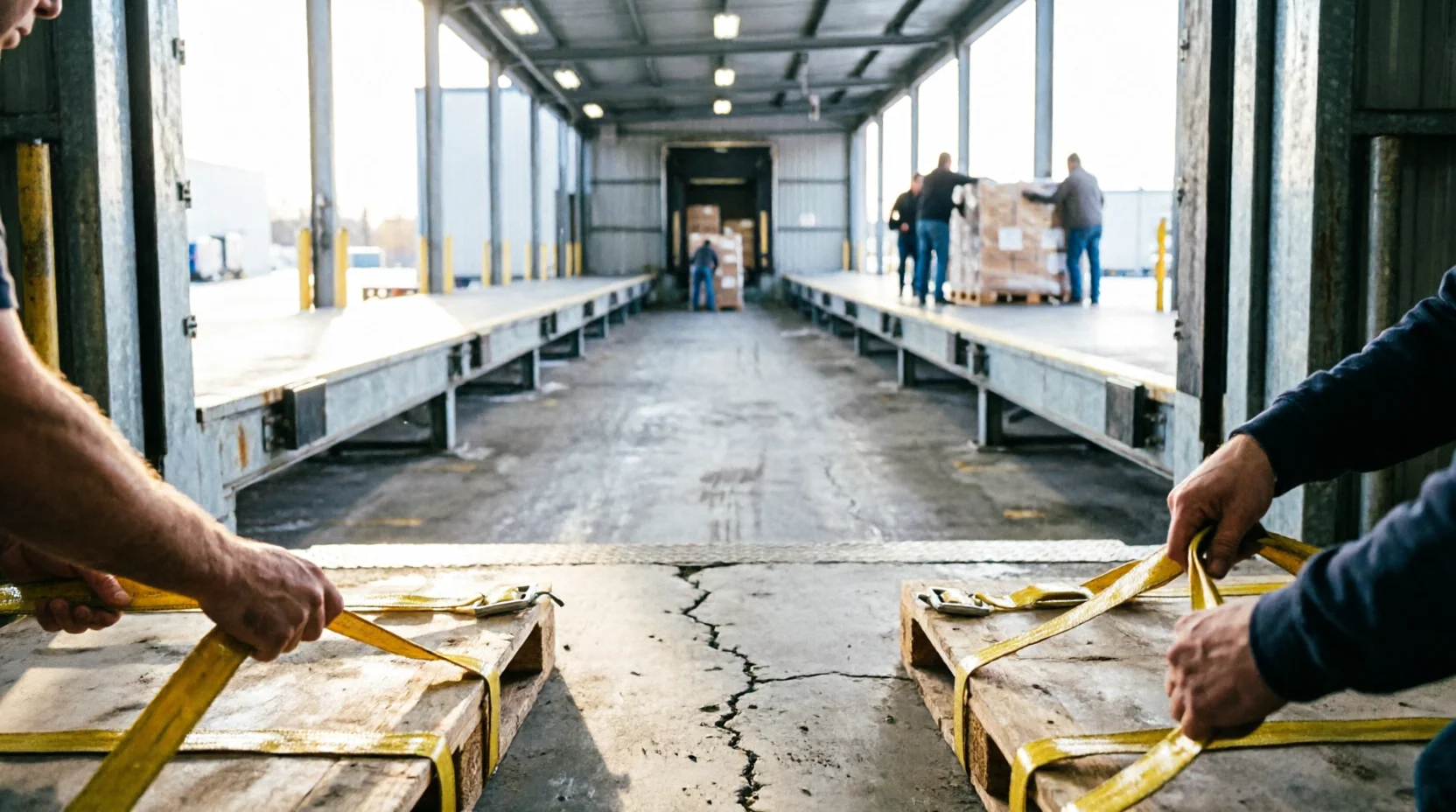
One detail is almost entirely absent from roughly two hundred to three hundred real pet-transport conversations, reviewed across the network for what customers raised without being asked: the crate. Not its dimensions, not its ventilation, not whether the animal has room to turn around inside it, despite that being exactly the kind of detail a caring pet owner should worry about most. Customers weren’t ignoring the middle of the job because they didn’t care about their pet. They were ignoring it because the middle of the job isn’t the part they’re built to evaluate.
Why doesn’t it seem to matter to them?
Two questions dominate nearly every conversation, and neither is about the middle. Did the pickup happen the way it was promised. Did the delivery. Everything else (the crate specs, the layover details, the exact temperature of the cargo hold) gets raised by a small minority of customers, usually the ones who’ve had a bad experience with a different operator before. For almost everyone else, the middle of the job is a black box they’ve implicitly agreed not to look inside, as long as the two ends of it come out right.
This isn’t a failure of communication. It’s how perception works, and it shows up far outside pet transport. The instinct in most businesses is to improve the thing itself: a faster website, a smoother booking flow, a more detailed tracking page. What changes how a customer feels about an experience is very often not the thing itself, but the two or three moments the mind chooses to keep. Improve the wrong moment and the improvement disappears into a part of the experience nobody was weighing in the first place. Nobody remembers the middle of a flight. People remember whether boarding felt calm, and whether the bag came out fast at the other end.
The assumption behind investing in a documented middle is that visibility earns trust: the more a customer sees, the more they’ll believe the job is being handled well. That assumption treats memory like a running log, weighted by how long each part took. Memory doesn’t work that way, and the research on exactly how it doesn’t work is unusually specific.
Peak-end rule customer experience: what gets remembered is not what happened
In 1993, Daniel Kahneman, Barbara Fredrickson, Charles Schreiber and Donald Redelmeier ran an experiment that has become one of the most cited findings in behavioral psychology. Subjects held one hand in painfully cold water for sixty seconds, then repeated the exercise with the other hand: the same sixty seconds, followed by an extra thirty seconds during which the water was still unpleasant but gradually warmed. The second trial involved more total pain by any objective measure. Given a choice of which trial to repeat, 69 percent of subjects chose the longer, more painful one.
The mechanism behind that choice matters more than the choice itself. Two data points explained almost entirely how subjects evaluated the experience overall: the peak discomfort, and the discomfort at the very end. Together, those two moments accounted for 94 percent of how subjects remembered the trial. Total duration (the variable a spreadsheet would treat as most important) added only about 3 percent more. Kahneman and his co-authors called the effect duration neglect. A simpler name for it: memory doesn’t average an experience. It edits it down to two frames and discards almost everything else.
The colonoscopy trial that tested it for real
A decade later, the same three researchers, joined by Joel Katz, tested whether the finding held up somewhere it mattered: a randomized trial on 682 patients undergoing colonoscopy. Half the patients, chosen at random, had their procedure extended by a short interval during which the scope was left in place without being moved. That added time and total discomfort, but it ended the procedure on a gentler note than it would otherwise have had. The other half received the standard procedure, ending at its most uncomfortable point.
Total duration told the researchers almost nothing about how a patient later remembered the procedure: the correlation was 0.10, close enough to zero to be meaningless on its own. The same two data points as the cold-water trial predicted the memory: the peak and the end. The effect wasn’t limited to a self-reported memory score, either. Patients who’d had the gentler ending were measurably more likely to come back for a repeat colonoscopy years later, holding for prior history and clinical indications: a 41 percent increase in the odds of returning. A study built to test a quirk of memory ended up predicting real, high-stakes future behavior: whether someone would voluntarily submit to the same procedure again.
That’s the sharper version of the pet-transport finding, not a softer one. A genuinely painful medical procedure shows the ending outweighs everything else. It was tested on 682 real patients, with years of follow-up. A pickup call and a delivery moment, doing the same thing to a lower-stakes shipment, are the identical mechanism running at a smaller scale, not a strange exception to it.
That colonoscopy trial holds a discipline lesson worth sitting with before moving on. A procedure that felt calm throughout, right up until a rough final minute, was remembered as worse than a longer procedure with an equally uncomfortable middle and a gentle end. The real test wasn’t the whole procedure. It was the last few minutes of it. A logistics job that runs smoothly through its entire middle and then falls over at delivery was never a victim of bad luck at the finish line: the delivery moment was the only point ever being tested. A calm middle never proved the job was going well, only that the two moments deciding that verdict hadn’t arrived yet.
Why some transactions matter and most others don’t
In 2006, McKinsey published research on what it called the “moment of truth” in customer service: the small number of interactions, a canceled flight, a lost card, a shipment gone wrong, where a customer’s emotional stake in the outcome spikes far above normal. The researchers pointed to one bank where more than 85 percent of customers who’d had a positive moment-of-truth experience increased the value they gave the bank afterward, buying more or investing more. More than 70 percent who’d had a negative one reduced their commitment. Routine interactions barely moved the number either way. McKinsey’s own description of the mistake this produces is memorable, if impressionistic rather than a controlled finding: many companies “make the mistake of overinvesting in humdrum transactions but fail to differentiate themselves in the experiences that really matter.” Worth taking as a directional warning, not a proven law: nobody has run a controlled study proving businesses systematically misallocate proof effort this way. But the phrase names the exact failure a well-documented crate transit represents: effort spent proving a humdrum moment went fine, aimed at a customer who was never going to weight that moment heavily either way.
McKinsey returned to the same territory in 2014 with a larger dataset: a survey of roughly 27,000 American consumers across 14 industries. Journey-level performance turned out to be 35 percent more predictive of overall satisfaction, and 32 percent more predictive of whether a customer eventually left, than performance on any single touchpoint measured on its own. The same research found something sharper still: a single negative experience carries four to five times the weight of a positive one in a customer’s overall judgment. Good moments in the middle don’t offset a bad ending. They don’t come close.
Proof of a good outcome beats proof of a good process
The same pattern holds in evidence closer to an actual purchase decision, not just a memory experiment. Writing in Information Systems Research in 2024, Hongfei Li, Jing Peng, Gang Wang and Xue Bai examined real reviews on a platform selling cosmetic healthcare procedures and split them by what each reviewer emphasized: the process, meaning how the staff communicated and how comfortable the visit felt, or the outcome, meaning whether the procedure actually worked. Outcome-oriented reviews were almost twice as persuasive in driving further sales as process-oriented ones. Buyers weren’t reading reviews to find out whether an appointment felt pleasant. They were reading them to find out whether the thing worked.
Logistics carries its own version of the same finding. Writing in the Journal of Operations Management in 2022, Akturk, Mallipeddi and Jia examined what drives customer ratings once tracking technology lets a customer watch a shipment move in real time. Late delivery, not tracking visibility, moved ratings down. Giving a customer more to look at during the middle of a job didn’t rescue a late outcome, and a good outcome didn’t need the extra visibility to earn a strong rating in the first place.
That doesn’t mean customers want silence during a job. Baymard Institute’s own research into order-tracking pages finds that customers do want real information while a shipment is in transit: an accurate delivery estimate, the name of the carrier, a status they can check without calling anyone. That’s a real, well-documented want, and it doesn’t contradict anything above. It answers a different question. Wanting to check on something while it’s still uncertain is about managing anxiety in the moment. It has almost nothing to do with what gets stored afterward as the memory of how the job went. The customer checking a tracking link at two in the afternoon and the customer writing a review three weeks later are, functionally, two different evaluators, weighing two different kinds of information.
The skeptical operator’s counter is fair: doesn’t a documented middle protect the business if something goes wrong, a photo record to point to if a claim gets disputed later? It can, and keeping basic records is good practice for that reason alone. But that’s a liability argument, not a trust argument, and the two shouldn’t share a line item. Photographing a crate to protect the business is worth doing. People misallocate the effort because they believe the photograph earns the customer’s trust rather than simply protects the business legally.
Reliability is harder to copy than a photo update
A structural reason makes this misallocation worth fixing beyond the psychology behind it. A well-lit in-transit photo, a welfare check-in text, a tracking link: every one of those is something a competitor can build by next quarter. None of it requires anything a determined operator with decent software can’t replicate almost exactly. That’s operational effectiveness rather than a real strategic position: doing something everyone else can eventually do too, and doing it slightly better for a while until they catch up.
Protecting the two moments customers evaluate is a different kind of investment. A guaranteed, no-fail pickup and a guaranteed, on-time delivery require the thing that’s genuinely hard to copy: schedule buffer, backup capacity for a delayed flight or a sick driver, and a contingency plan built before the job instead of improvised during it. A competitor can’t bolt that on in a sprint. Building it takes years, and it’s the one capability standing between an operator and the two moments that decide whether a customer comes back.
The operational discipline behind pickup and delivery reliability is expensive, unglamorous, and the part that decides the outcome. It gets whatever budget is left over, while the dashboard and the photo feed (cheap to build and easy to show off in a sales deck) get the rest. That’s not a marketing problem. It’s a resource-allocation problem, solvable the moment it’s named correctly.
This is also the exact quality a demand network has the most reason to reward: not the prettiest tracking page, but the operator whose pickups and deliveries a network can stake its own reputation on. That’s the real test behind who gets sent more work through Movaros’s fulfilment network, not the polish of anyone’s photo updates.
What to protect, prove and communicate
None of this argues for going dark during a job. Send the photo. Answer the check-in question if someone asks. Keep the tracking link live, because customers do want it in the moment, and making someone chase basic status information creates its own, avoidable friction. What changes is where the business spends its proof, its redundancy and its own anxious attention, not whether it communicates at all.
Protect the pickup call like it’s the whole sale, because to a customer’s memory, it very nearly is. Protect the delivery moment the same way, and build the contingency capacity that makes both of them reliable by design rather than reliable most of the time. Everything in the middle can stay exactly as warm and communicative as it already is. It just isn’t what’s earning the trust.
Pull up the last twenty jobs on the books and count. How much of what got documented, photographed and sent unprompted landed on the two moments a customer will actually remember. And how much of it was effort spent proving that a part of the job nobody was ever going to judge anyone on went fine. That count is the whole peak-end rule customer experience argument, reduced to an afternoon’s arithmetic.


