
Every pet-transport call carries a question underneath the question. A customer might ask about crate size, or timing, or whether someone will be with the animal during a layover. What they’re actually asking, underneath all of it, is whether their pet is going to be safe.
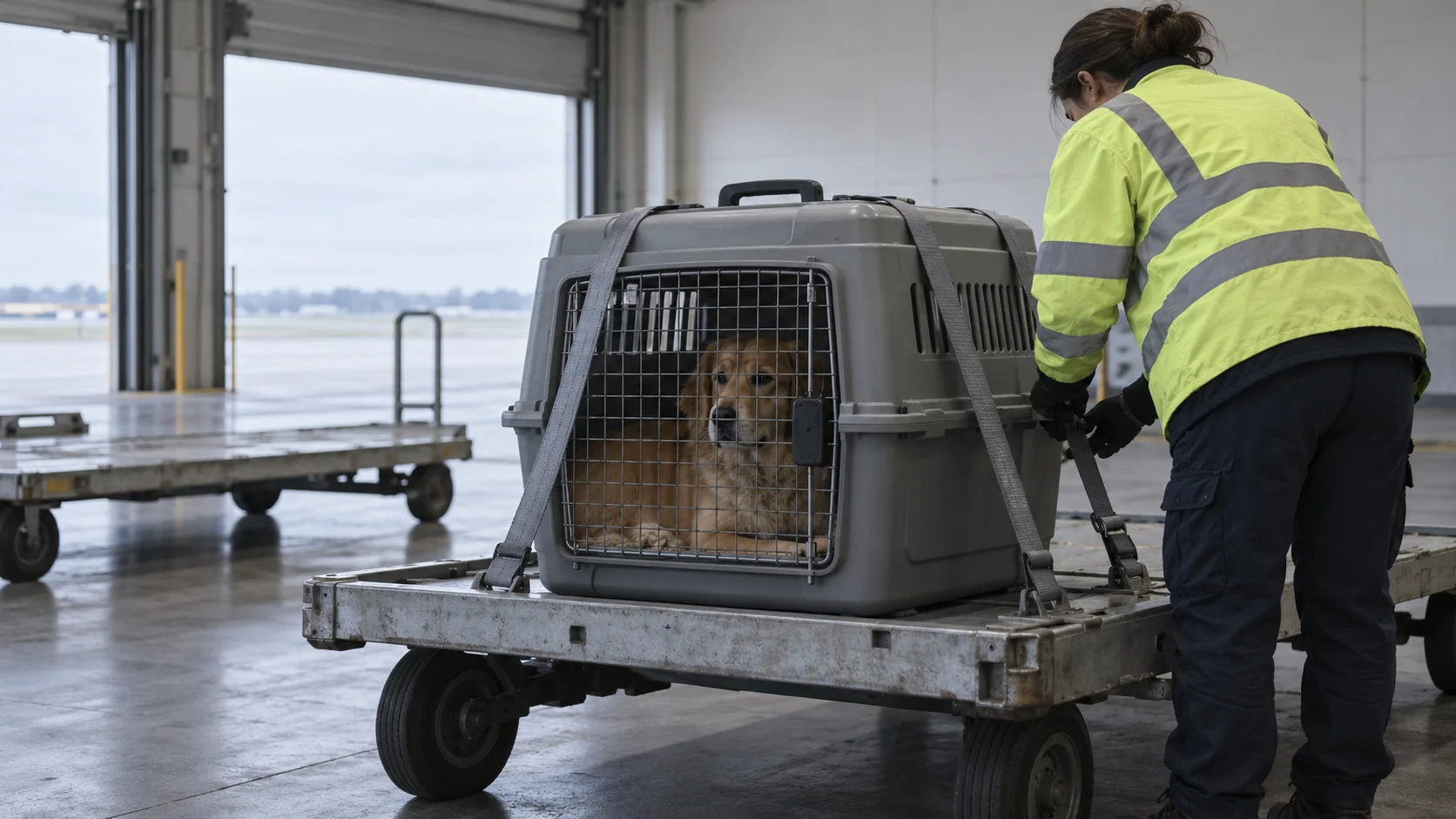
Most operators answer with tone: we’re careful, we’re experienced, we’ve done this a thousand times. That answer is honest. It’s also the same thing every competitor says, including the ones who aren’t careful. A nervous customer has no way to tell the difference between a real safety record and a well-rehearsed reassurance.
A better answer sits in a federal database almost nobody in this industry actually uses.
Most pet-transport marketing leans on the same three signals: years in business, a warm testimonial, a photo of a happy dog stepping off a plane. None of those are false. None of them answer the actual question a scared customer is asking, which isn’t “do you like animals,” it’s “what happens to my specific pet on this specific flight.”
The number nobody hands to a nervous customer
The U.S. Department of Transportation has required airlines to report every incident involving the loss, injury, or death of an animal during air transport since 2000. Congress mandated the reporting that year, specifically because of public concern about pet safety. The reports are public, filed monthly, and published in DOT’s Air Travel Consumer Report at transportation.gov/airconsumer.
For the full 2024 calendar year, U.S. carriers reported 13 total incidents across every animal transported by every reporting airline: 10 deaths, 3 injuries, zero lost. Millions of animals fly every year. Earlier DOT data covering 2015 through 2020 put the incident rate at roughly 0.007 percent, calculated across more than 2.7 million animals transported in that window.
The pattern hasn’t reversed since. Independent tracking of the more recent monthly filings through 2026 shows the same shape: run after run of months with zero reported incidents, interrupted by an occasional single case. One reported death on a single flight in May 2026 was exactly that kind of isolated event, the kind the reporting system exists specifically to surface rather than bury. Every major carrier files the same report on the same schedule, whether the month was clean or not.
No company’s marketing department wrote those numbers. A customer could check them in the same public federal reporting system, if anyone ever told them it existed.
Why the fear runs so far ahead of the risk
Customers arrive more afraid than the real numbers justify for a well-documented reason that has nothing to do with how careful any individual operator actually is.
People don’t judge risk by calculating probabilities. They judge it by how easily an example comes to mind. A dramatic story about a pet lost or hurt in transit is vivid, memorable, and easy to picture, so it gets weighted as if it were common. A calm, uneventful flight is not a story anyone tells, so thousands of them leave no trace on a customer’s mental model at all. Psychologists call this the availability heuristic: events that are easy to recall get judged as more frequent than they really are, and rare, severe outcomes get remembered far longer than safe, ordinary ones ever do. Risk researcher Paul Slovic’s work on what he termed “dread risk” found something closely related: how frightening an outcome feels is the biggest driver of how dangerous people judge it to be, not how often it actually happens.
Putting those two findings together makes the shape of a nervous pet-transport customer obvious. They’ve likely seen one viral story about a pet transport gone wrong, somewhere, at some point. They have never seen a headline about the ordinary flight that went fine, because there’s no story there. The vivid, rare case is the only data point most customers ever get, and it’s the one shaping how safe they believe this is.
Slovic’s later work sorted risks into two broad categories, and pet transport lands squarely in the more dangerous-feeling one. An “unknown risk” is something new, poorly understood, hard to observe directly, the way early GMO food or an unfamiliar chemical reads to most people. Pet transport carries a version of that too: the animal is out of the owner’s sight and can’t report back on how the flight actually went. A customer isn’t managing a risk they can verify. They’re managing a risk they have to take entirely on faith, for hours, with no way to check in.
An operator who just says “we’re careful” is arguing with a fear built entirely on availability. That argument uses nothing but more availability to make its case. The customer’s underlying model of the risk never changes, because reassurance doesn’t touch either mechanism driving the fear. It doesn’t supply a memorable safe outcome to compete with the vivid unsafe one, and it doesn’t give the customer anything to verify during the hours they can’t see what’s happening. The real fix is putting an actual number in the space where a vague, easily-imagined horror story currently lives.
What that actually sounds like on a real call
The difference is smaller than it looks and bigger than it sounds. Compare two answers to the exact same question: “Is this safe?”
The first: “Absolutely, we take every precaution and we’ve never had a serious issue.” True, unfalsifiable by the customer, and identical to what every operator says, careful or not.
The second: “The federal government tracks every incident, industry-wide, and last year there were 13 across every airline in the country, out of millions of animals flown. That’s a real number you can look up yourself, and it’s why we build our own handling around avoiding the small handful of things that actually cause the incidents that do happen.” Same underlying confidence. A completely different kind of evidence, because it’s checkable, specific, and doesn’t ask the customer to just trust a stranger’s word.
Neither answer requires being right about every possible edge case. Neither promises perfection nobody can promise. The second one just replaces a feeling with a fact, and a fact a customer can verify is worth more than reassurance they can’t.
The fair objection is that an aggregate industry number doesn’t guarantee any individual customer’s own pet comes through fine, and it deserves a real answer, not a dismissal. It’s true: 13 incidents in a year means 13 real, specific losses to 13 real families, and no number makes those any less real to the people who lived them. The aggregate number actually sets the honest baseline a customer is working from before anything operator-specific gets added: routine health documentation, direct crate loading instead of automated cargo handling, temperature monitoring during layovers. Whatever a specific operator’s own real practice happens to be, it’s what gets added on top of that baseline. The federal number establishes how rare a bad outcome is industry-wide. An operator’s own specific practices are the separate, additional case for why this booking in particular is likely to be one of the ordinary ones.
Think of it less as a script and more as a habit: the next time “is this safe” comes up, the honest answer includes a real number, not just a warmer tone. Most operators in this industry have the safety record to back that up already. Very few have ever said the actual number out loud to a customer who was scared enough to ask.
Where the number belongs before anyone calls
Waiting for the safety question to come up live is leaving most of the value on the table. By the time a customer is on the phone asking “is this safe,” they’ve usually already narrowed their choice down to two or three operators based on whatever their website told them first. If none of those websites mentioned real safety data, the customer never learned it existed as a category of information worth comparing, and the live call becomes a rescue mission for a gap the marketing should have closed already.
A dedicated FAQ answer, a line on the service page, a short paragraph near the booking form: any of these can carry the real DOT figures with a plain link to the public report. No chart or campaign is required, just one honest paragraph, in the place a nervous person is already reading, before they’ve decided who to call.
That also does something a live conversation can’t: it reaches the customer who never calls at all. That’s the one who reads three websites, gets the same warm reassurance from all three, and picks based on price or proximity, because nothing else gave them a way to tell the operators apart. A real number, published where that comparison happens, is a genuine point of difference in a category where almost every operator’s marketing currently says the exact same thing.
What this doesn’t fix, and what it does
Real incidents do happen, rarely, and no honest operator should pretend the number is zero. The real data actually argues something narrower: the gap between how large the risk feels on the way into a booking call and how large it actually is, closed with a specific number instead of a general tone.
A conversation-design problem explains why the same intake questions that build trust in a relocation sale can read as friction in a pet-transport one. A sales-tone problem explains why a customer who already tried and failed to book direct through an airline arrives frustrated before the call even starts. This piece is actually about something narrower than either one: the instant a customer asks, directly or not, whether their pet is going to be okay, and whether the honest answer is a promise or a number.
The answer sits in a public federal report almost nobody in this industry has ever opened, free to cite, free to link, already verified by the government that requires it. The same real number does the same real work either way, whether it shows up on a website a customer reads at midnight three days before they can bring themselves to call, or in the actual sentence spoken out loud when they finally do. It gives a scared customer something to check, instead of just something to believe.
Movaros helps operators lead with real data, not just reassurance.
Closing a perception gap like this one, on your own site and in your own sales conversations, is exactly the kind of positioning work building on Movaros is built to carry.


