
A French Bulldog booked from Los Angeles to Sydney cannot fly cargo on American Airlines, Delta, or United. Not because of paperwork, a missing form, or an expired vaccination record. Because of its skull. All three carriers exclude brachycephalic, or snub-nosed, breeds from the cargo hold outright, citing the same respiratory risk that makes short-faced dogs and cats more likely to suffer heat stress or oxygen deprivation at altitude than any other animal that flies. The shipment doesn’t fail on a clerical error. It fails structurally, before anyone has requested a single quote.
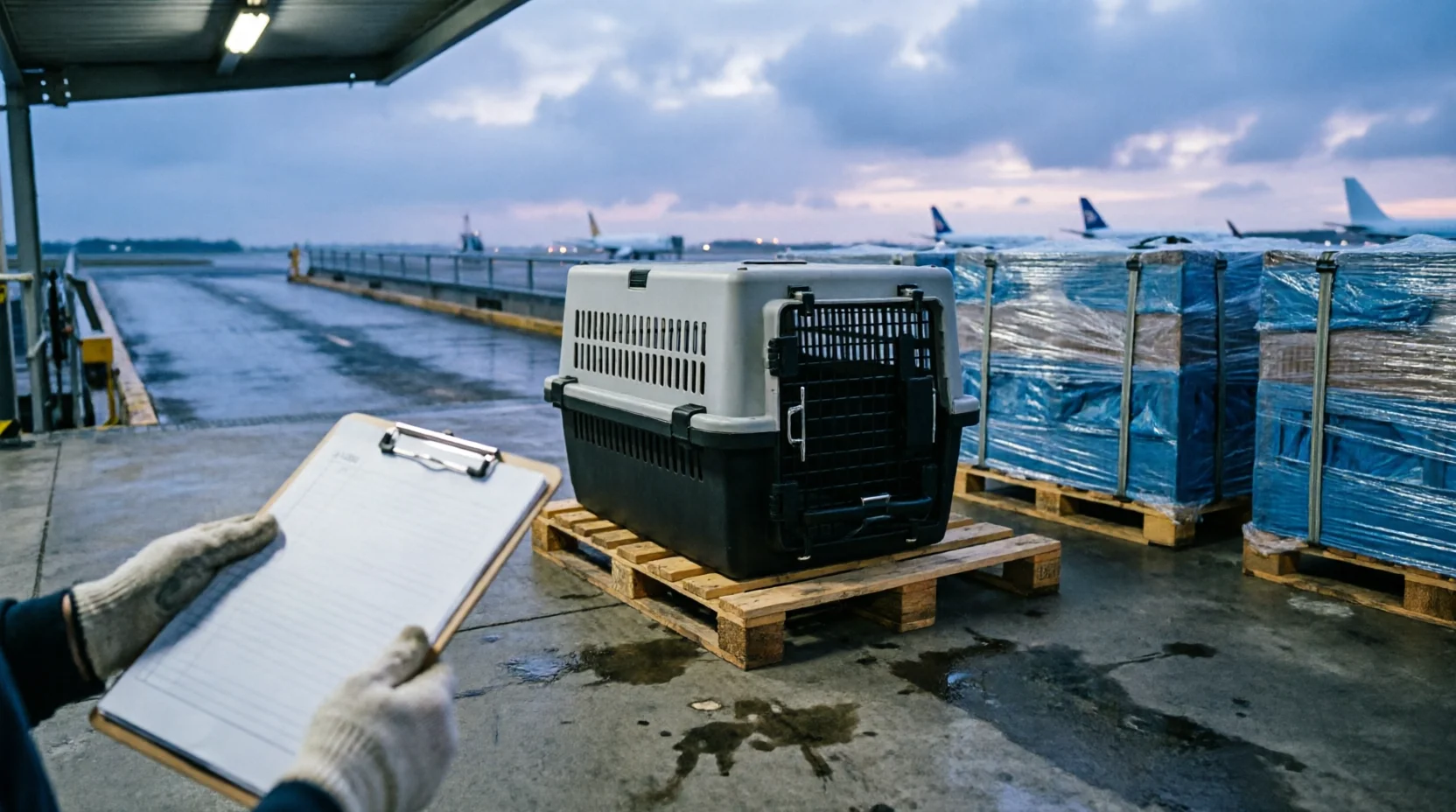
That’s the reason to look closely at pet transport, even though most logistics operators will never move a single animal in their careers. The category is small, unusually regulated, and structurally resistant to exactly the kind of price-comparison marketplace that has already reshaped freight, self-storage, and household moving. A six-quote race can price a pallet of furniture. It cannot meaningfully price a snub-nosed dog’s summer flight embargo, a 180-day rabies titre wait, or a government-run quarantine transfer that starts the moment the plane lands. Pet transport is a preview of what happens to every logistics category that resists being reduced to a dropdown menu.
A market too small to notice and too fast to ignore
Starwood Pet Travel’s own corporate inquiry volume rose from 1,163 in 2019 to 4,545 in 2024, just under a 300 percent increase in five years, with 2026 tracking as the highest year on record. AIRINC’s Long Term Assignment Survey, which tracks corporate mobility policy across major employers, found the share offering a pet relocation benefit climbed from 37 percent in 2022 to 49 percent in 2025, while the share offering none fell from 62 percent to 51 percent over the same period. Two trends compound here: pets have moved from property to family member in household budgets, and global corporate mobility keeps climbing on its own, growing the population relocating with an animal even when overall migration flattens.
None of that makes pet transport large in dollar terms. It’s a rounding error next to household goods or corporate freight. Strip the numbers down, though, and one pattern remains. Demand rises every year. The service gets harder to standardize every year. Regulation sharpens; it does not loosen. Small market, hard service, rising demand: that combination deserves an operator’s attention.
The crate has to be built to a formula, not a guess
Every airline that still accepts pet cargo defers to the same rulebook: IATA’s Live Animals Regulations, now in its 52nd edition for 2026. The LAR specifies crate dimensions rather than merely suggesting them. A dog has to stand fully upright without its head touching the container ceiling, turn a complete circle, and lie down naturally, which makes crate size a function of the animal’s measured height and length, not a size picked off a shelf. Ventilation openings have to cover at least 16 percent of the surface area across all four sides, spaced so no gap exceeds 25mm by 25mm for a dog or 19mm by 19mm for a cat: tight enough to stop a paw or nose from getting through, open enough to keep air moving through a pressurized, imperfectly climate-controlled hold.
Snub-nosed breeds carry a specific penalty on top of the general formula: IATA requires a container at least 10 percent larger than the standard calculation produces, acknowledging that a compromised airway needs more air volume, not just more legroom. Two adult dogs can share a crate only if both weigh under 14 kilograms and already live together; anything larger travels alone, in its own container, at its own cost. A shipper who dispatches a non-compliant crate gets it refused at check-in, not flagged for review afterward. Refusal happens at the airport counter, with a client standing next to a crate and a flight leaving without their dog.
The embargoes start before the rulebook does
IATA sets the floor. Individual carriers build their own restrictions on top of it, and that’s where most pet shipments die. American Airlines Cargo refuses brachycephalic and snub-nosed breeds outright, a category that runs well past pugs and bulldogs into boxers, Shih Tzus, and mastiffs. Delta has gone further and suspended general-public pet cargo entirely; the only shipments it still accepts are active-duty military and State Department personnel moving under government orders, and even that narrow exception still excludes brachycephalic breeds. United has historically restricted more than twenty breeds from its hold on the same grounds. When an operator quotes a move for a client with a French Bulldog, a Boston Terrier, or a Persian cat, they aren’t comparing carriers on price. In most cases, exactly one option remains: a specialized live-animal charter, or an in-cabin booking under an airline’s own weight cutoff, either of which costs multiples of what a standard-breed dog pays in cargo.
Heat stacks a second, seasonal embargo on top of the breed restrictions. American Airlines Cargo won’t accept live animals when the ground temperature at departure or arrival sits outside a 45-to-85-degree Fahrenheit band, and it pauses pet cargo entirely to and from Las Vegas, Phoenix, Tucson, and Palm Springs from May through September. That window runs opposite the northern hemisphere’s own peak relocation season. When an operator plans a mid-summer move into the desert Southwest, or flies an animal out of the southern hemisphere’s own summer in January, they aren’t choosing a shipping date. The airline already chose it, and an early heat wave can turn a booked shipment into an unbookable one with only a few weeks’ notice.
The same shipment, three governments, three different clocks
Clearing the airline’s list and IATA’s crate spec doesn’t finish the shipment. The destination country’s agriculture ministry takes over next, with its own rules built around a different risk entirely: not the animal’s comfort in transit, but what it might be carrying when it lands.
Australia runs the strictest system among major English-speaking destinations. Every dog or cat has to clear a rabies neutralising antibody titre test, and the country of origin determines what happens after. Animals arriving from a Group 3 country face a minimum 30-day post-arrival quarantine at the government’s Mickleham facility outside Melbourne, the country’s only site equipped to hold cats and dogs. Group 3 includes the mainland United States, Canada, the United Kingdom, and most of continental Europe. That period drops to 10 days only if the pet’s identity gets independently verified by a competent authority before the titre blood draw, and at least 180 days before the animal departs. Missing that window closes the shorter path for good; there’s no appeal once the animal is airborne. Owners can’t collect their pet at the airport either way. Government staff transfer every quarantine-bound animal directly from the tarmac to Mickleham.
Japan runs on a different clock. Its Animal Quarantine Service requires a rabies antibody titre of at least 0.5 IU/ml from a designated lab, followed by a mandatory 180-day wait counted from the day the blood was drawn, not the day results arrive. Advance notification has to reach the Animal Quarantine Service at least 40 days before landing. When every piece is right, the animal clears in hours. When one piece is wrong, say a titre drawn a week too early or a notification filed on day 39, the animal goes into detention quarantine for however long it takes to fix the deficiency, up to 180 days, at the owner’s expense for the duration.
The United Kingdom sits between the two. Pets arriving from a listed country skip both the long wait and the mandatory quarantine. The list includes the United States, Canada, and Australia. Pets from an unlisted country need the same titre test, taken at least 30 days after vaccination, followed by a flat three-month wait before entry, with no exception for an early result.
Three governments, three starting points, and none of them share a formula. An operator who has priced one country’s pet shipment has priced exactly one country’s pet shipment.
One dog, Los Angeles to Sydney
Abstractions hide costs. An example exposes them. So take one dog on one route: a French Bulldog moving with its owner from Los Angeles to Sydney for a two-year work assignment.
The clock starts 180 days before departure, because Australia’s reduced-quarantine path requires the pet’s identity to be verified before the titre blood draw, and that draw has to happen at least 180 days before the flight. Skipping that step defaults the shipment to 30 days of quarantine instead of 10, adding three extra weeks of boarding fees at a facility neither the owner nor the operator controls. Somewhere in that same window, the operator has to find a carrier willing to take the dog at all. American, Delta, and United all exclude the breed from cargo, which usually means a specialized pet-relocation charter with a climate-controlled hold, or an in-cabin booking if the dog comes in under the weight cutoff. Either path changes the price by a factor most household-goods moves never see. The booking also has to dodge the heat embargo on both ends: Los Angeles rarely trips American’s 85-degree ceiling, but a departure timed for Sydney’s own summer, December through February, risks the same restriction working in reverse if the receiving carrier applies it on arrival. A crate that’s wrong by a few centimeters gets the animal refused at check-in the day it was meant to fly, with the family standing at the counter and a lease already signed on the other side of the Pacific.
Read that itinerary again. Six months of lead time. One breed rule. Two heat embargoes. A crate measured to the centimeter. No dropdown menu asks for any of it.
“This is a tiny fraction of the business. Why does it matter?”
The skepticism is fair on the numbers alone. Pet transport is a rounding error against household goods or corporate freight for almost every general mover, and nobody is suggesting an operator build a pet-transport arm to chase a category this small.
The mechanism underneath the category makes this worth reading closely, and that mechanism generalizes. A comparison marketplace works by reducing a service to the handful of variables it can fit into a form: origin, destination, weight, date. That model wins whenever those four fields actually determine the price, which covers most local moves and single-pallet freight. It breaks down exactly where pet transport already lives, where a regulatory calendar, a breed-specific rule, or a country’s quarantine law changes the answer more than any form field can.
Every operator carries some version of that same complexity in their own service line, at a fraction of pet transport’s scale. International household moves carry customs variance by country. Corporate relocations carry visa timing a generic quote form can’t capture. Specialty freight carries hazmat classifications with their own paperwork chain. None of it is pet transport, but pet transport, freight, and relocation run the same long sale underneath: a price that depends on facts a six-field form never asks for. The useful question is which part of what an operator already does looks like pet transport, not whether they move animals at all, and whether their sales process treats that complexity as the reason to charge for expertise, or buries it behind a generic quote form because that’s what the marketplace model trained everyone to expect.
Complexity is the barrier a marketplace can’t buy its way past
Ben Thompson’s aggregation theory explains why a comparison marketplace wins by default in most categories: it captures demand, commoditizes the supply side, and lets the cheapest capable provider win. For most goods, the buyer’s real question reduces to price and speed. Pet transport, and every category that behaves like it, breaks that default. The supply side can’t commoditize because the service itself carries real, verifiable variance: a different crate spec per breed, a different carrier list per airline, a different clock per government. That variance isn’t a market inefficiency waiting for a smarter algorithm to solve. It is the service.
Hamilton Helmer’s “7 Powers” calls this a real barrier, not a temporary inconvenience. When an operator can source a compliant crate, book a carrier that still accepts the breed, and run three governments’ clocks without dropping one, they aren’t competing against five other quotes. They’re the only credible bid in the room, and a client responsible for a living animal’s safe arrival already knows it.
That’s the shape of the next decade for every logistics category this complex, not only pets. As routine freight and straightforward household moves keep getting easier to compare and cheaper to commoditize, the categories that hold their ground are the ones where the regulation, the risk, and the anxiety are real and can’t be flattened into a dropdown menu. Pet transport got there first because animals were never going to tolerate being priced like a pallet. For an operator already doing that kind of regulation-heavy work today, fulfilling demand that already needs this level of expertise is a different sales motion than winning it on price, and it’s the one that gets stronger as the work gets harder, not weaker.
Societies have never let markets touch everything. Marriage, medicine, and the raising of a child have all resisted being priced by the pound or measured on a chart, not because no one tried, but because something about them refused to fit the form. Pet transport turns out to be a small, modern instance of a very old boundary: which parts of a life get left to comparison shopping, and which parts still require someone who actually knows what they’re doing. Which categories still deserve to sit on the other side of that line as dropdown menus swallow more of daily life, and who gets to decide?


